Instagram Downloader Safety Guide: What You Need to Know
Learn about safety and security when using Instagram downloaders. Privacy tips, security best practices, and how to stay safe online.
Is It Safe to Use Instagram Downloaders? Here's What You Should Know
I get it - when you're downloading things from the internet, safety is probably the first thing on your mind. And honestly? It should be! There are a lot of sketchy tools out there, and you want to make sure you're using something you can trust.
Let me break down everything you need to know about staying safe when downloading Instagram content. I'll be straight with you about what's safe, what's not, and how to tell the difference.
The Big Question: Is It Actually Safe?
Short answer? Yes, but only if you're using the right tool. Let me explain what makes a downloader safe (and what makes one sketchy).
Good downloaders don't ask you to:
- Create an account or sign up
- Install any software on your computer
- Give them your Instagram password (seriously, never do this!)
- Download sketchy browser extensions
- Pay for something that should be free
Good downloaders do:
- Work right in your browser (no downloads needed)
- Use HTTPS (that little lock icon in your address bar)
- Let you use them without signing up
- Have good reviews from real users
- Respect your privacy
If a downloader is asking you to do any of those "don't" things, run away! There are plenty of safe options out there.
What About My Privacy?
This is probably your biggest concern, right? I know it was mine. Let me tell you exactly what happens (and doesn't happen) when you use a safe downloader like ours.
We don't collect:
- Your Instagram login info (we never ask for it, and you should never give it)
- Your personal information (name, email, phone number - nada)
- The content you download (we don't store it)
- Your browsing history (we can't see what else you're doing)
- Your location (we don't track where you are)
What actually happens:
- You paste a URL
- We process it temporarily to get the video or image
- You download it
- That's it! We don't keep anything
Think of it like a vending machine - you put in money, you get a snack, and the machine doesn't remember you were ever there. That's how it should work.
Red Flags to Watch Out For
I've tried a lot of downloaders (probably too many), and I've learned to spot the sketchy ones. Here are the warning signs:
🚩 They want you to install software - If a website is asking you to download and install something, that's a red flag. Browser-based tools are way safer.
🚩 They want your Instagram password - This is a HUGE red flag. No legitimate downloader needs your password. Ever.
🚩 They want you to create an account - Why would they need that? They don't. It's usually to collect your data or spam you later.
🚩 The website looks sketchy - Trust your gut! If something feels off, it probably is.
🚩 They're asking for payment - Downloading Instagram content should be free. If they're charging, find a different tool.
How to Stay Safe: My Personal Checklist
Before I use any downloader, I always check:
1. Does it use HTTPS? - Look for that lock icon in your browser's address bar. If it's not there, don't use the site.
2. What do reviews say? - I always check what other users are saying. If there are lots of complaints about viruses or sketchy behavior, I skip it.
3. Do they want me to install something? - If the answer is yes, I'm out. Browser-based tools are the way to go.
4. Is it free? - It should be. If they're charging, there are free alternatives.
5. Do they respect privacy? - Check their privacy policy (if they even have one). If it's vague or missing, that's suspicious.
The Legal Stuff (I Know, Boring But Important)
Let's talk about what's legal and what's not. I'm not a lawyer, but here's what I've learned:
You can legally:
- Download public content for your own personal use
- Save your own content (obviously!)
- Download content you have permission to use
You can't legally:
- Download copyrighted content and redistribute it
- Use downloaded content commercially without permission
- Violate Instagram's terms of service (though this is more of a platform rule than a legal issue)
The key is being respectful. If you're downloading someone's content, give them credit if you share it. It's just the right thing to do, you know?
What We Do to Keep You Safe
I want to be transparent about how we handle safety and privacy:
We don't collect your data - Seriously, we don't. No tracking, no analytics on your downloads, nothing.
We use secure connections - Everything is encrypted with HTTPS, so your data is protected.
We don't store anything - URLs are processed temporarily and then forgotten. We don't keep a record of what you download.
We're transparent - We have a clear privacy policy that explains exactly what we do (and don't do) with your information.
We update regularly - We keep our security up to date to protect against new threats.
My Honest Take
Look, I've been using downloaders for a while now, and I've seen the good, the bad, and the ugly. The truth is, most downloaders are either safe or obviously sketchy - there's not a lot of middle ground.
The key is using your common sense. If something feels off, trust that feeling. If a tool is asking for things it shouldn't need, find a different one. There are plenty of safe options out there.
Bottom Line
Using Instagram downloaders can be totally safe - you just need to use the right one. Look for tools that work in your browser, don't ask for personal info, and have good reviews.
And always remember: if something seems too good to be true, or if it's asking for things that don't make sense, trust your instincts and find a different tool.
Stay safe out there, and happy downloading! 🛡️
Share this article
Related Articles
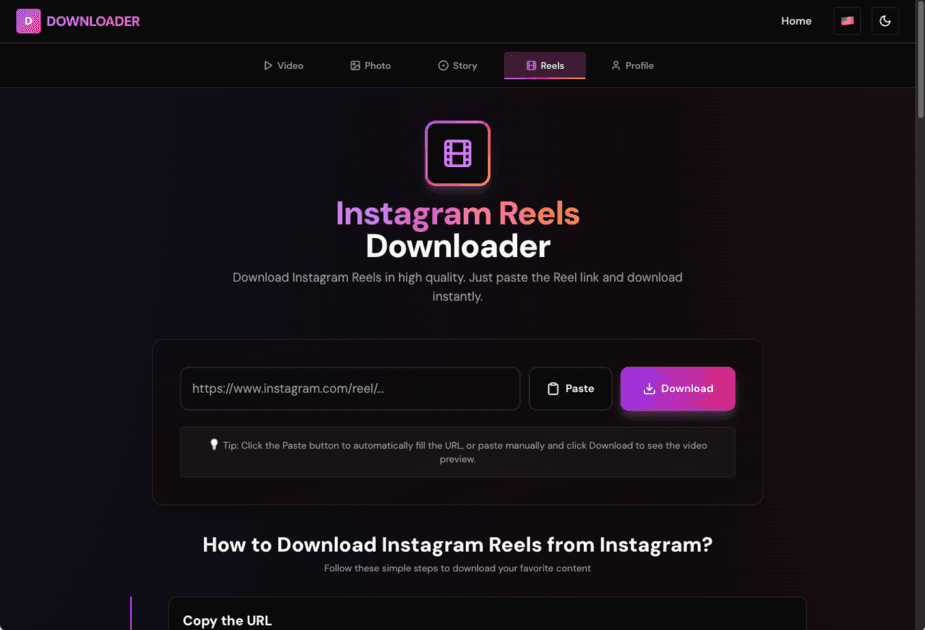
How to Download Instagram Reels: Complete Guide 2025
Learn the easiest way to download Instagram Reels on any device. Step-by-step guide with tips for high-quality downloads. No tech skills needed.
Online Privacy in the Age of Social Media
An overview of online privacy concerns, data collection practices by social platforms, and major events like the Cambridge Analytica scandal.
Comments
Notes are saved only in this browser (local storage). They are not sent to a server.
Comments
Loading…